Regenerative medicine refers to treatments that help the body repair, replace, or regrow the body parts that have been damaged. This area of study seeks to promote healing through the body’s own mechanisms rather than just providing treatment for symptoms.
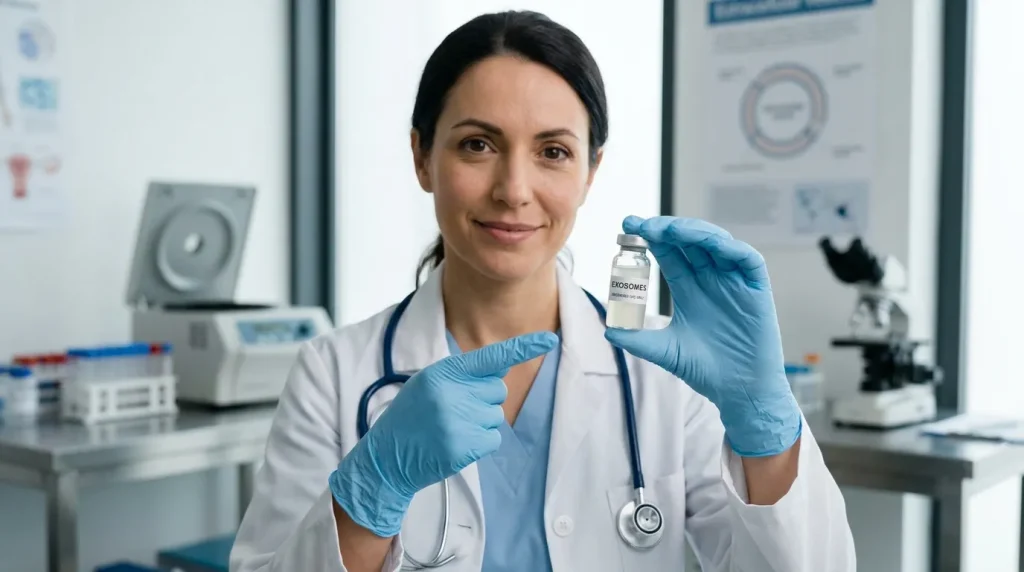
One of the most exciting innovations in this field is the discovery of exosomes. Exosomes are extracellular vesicles that are secreted from cells. They contain proteins, growth factors, lipids, and DNA/RNA which enable cells to exchange information. Scientists are investigating the possibility of using exosomes in tissue regeneration, anti-inflammatory effects, and various other medical and cosmetic therapies.
The following are the many roles that exosomes can play in regenerative medicine.
Tissue Regeneration
One of the main functions of exosomes is supporting tissue regeneration after injury or damage.
Rather than replacing damaged cells, exosomes help create an environment that encourages the body’s own repair processes.
Exosomes may support:
- Skin regeneration
- Muscle repair
- Soft tissue healing
- Organ recovery
- Connective tissue repair
This regenerative potential is one of the reasons exosomes have gained significant attention in medical research.
Cell-to-Cell Communication
Healthy tissues depend on constant communication between cells.
Exosomes act as natural messengers, carrying biological signals from one cell to another. This communication helps coordinate the healing process and allows different cells to respond to injury more effectively.
Cell communication supports:
- Tissue repair
- Cellular coordination
- Healing responses
- Immune regulation
- Normal cell function
Efficient communication allows damaged tissues to recover more effectively.
Reducing Inflammation
Inflammation is an important part of healing, but excessive inflammation can slow recovery and damage healthy tissue.
Research suggests that exosomes may help regulate inflammatory responses, creating a healthier environment for tissue repair.
Potential benefits include:
- Balanced immune response
- Reduced tissue inflammation
- Less cellular damage
- Improved healing conditions
- Better recovery support
Managing inflammation is essential for successful regeneration.
Promoting Cell Growth
New tissue cannot form without healthy cell growth.
Exosomes contain signaling molecules that may encourage certain cells to grow, divide, and replace damaged tissue during the healing process.
This may help support:
- Cell proliferation
- Tissue repair
- Healthy regeneration
- Skin renewal
- Recovery after injury
Cell growth is one of the key processes involved in regenerative medicine.
Supporting Stem Cell Activity
Although exosomes are not stem cells themselves, they play an important role in supporting stem cell function.
Studies suggest that exosomes may influence how stem cells communicate, migrate, and participate in the body’s natural repair processes.
This may contribute to:
- Stem cell signaling
- Tissue regeneration
- Cell repair
- Healing support
- Cellular maintenance
Researchers continue to explore how exosomes and stem cells work together during regeneration.
Enhancing Wound Healing
Wound healing involves several stages, including inflammation, tissue formation, and remodeling.
Exosomes may help support multiple phases of this process by improving communication between cells and encouraging tissue repair.
Potential benefits may include:
- Faster wound healing
- Improved skin repair
- Better tissue regeneration
- Reduced recovery time
- Healthier scar formation
This has made exosomes an area of growing interest in wound care research.
Stimulating Angiogenesis
Healing tissues require a healthy blood supply to receive oxygen and nutrients.
Exosomes may help stimulate angiogenesis, which is the formation of new blood vessels during tissue repair.
Angiogenesis supports:
- Better blood circulation
- Oxygen delivery
- Nutrient transport
- Tissue recovery
- Long-term healing
Healthy blood vessels are essential for successful regeneration.
Cartilage and Bone Repair
Cartilage and bone have limited natural healing ability, making injuries in these tissues particularly challenging.
Researchers are studying whether exosomes may help support the repair of cartilage and bone by influencing cells involved in regeneration.
Potential research areas include:
- Cartilage healing
- Bone regeneration
- Joint repair
- Connective tissue support
- Orthopedic recovery
Although research is ongoing, this remains one of the most promising areas of regenerative medicine.
Nerve Tissue Regeneration
Repairing damaged nerve tissue is one of the biggest challenges in medicine.
Scientists are investigating whether exosomes may help create conditions that support nerve repair and improve communication between nerve cells.
Current research is exploring their potential role in:
- Nerve regeneration
- Cellular signaling
- Tissue repair
- Recovery after nerve injury
- Neurological healing
Further clinical studies are needed to better understand these potential applications.
Future Clinical Applications
Research into exosomes continues to expand rapidly.
Scientists are investigating how exosome-based therapies may be used in many different areas of medicine, including dermatology, orthopedics, neurology, sports medicine, and aesthetic treatments.
Potential future applications include:
- Skin rejuvenation
- Hair restoration
- Orthopedic medicine
- Chronic wound care
- Cardiovascular research
- Neurological therapies
As research progresses, exosomes may become an increasingly important tool in regenerative medicine.
Conclusion
Exosomes are becoming more and more involved in regenerative medicine due to their contribution to the body’s own healing mechanisms. With enhanced cell communication, increased tissue regeneration, decreased inflammation, promotion of cell proliferation, and healing of wounds, exosomes are promising in several fields of medicine.
While there are a lot of possible ways to use exosomes in medicine that are currently investigated, it can already be said that the use of exosomes may be helpful for future development of skin revitalization, orthopedic injuries treatment, nerve regeneration, hair restoration, and other regenerative medicine practices.
Also Read: How Does Exosome Therapy Work?