Collagen production sits at the center of nearly every regenerative aesthetic treatment, and PDRN has earned a strong reputation specifically for its ability to stimulate this process.
Understanding the pathway through which PDRN drives collagen synthesis helps clarify why it has become such a widely used tool for improving skin firmness, texture, and overall structural quality.
The Adenosine Receptor Pathway
PDRN’s collagen-stimulating effect begins with its interaction with adenosine A2A receptors on the surface of fibroblasts and other skin cells.
When PDRN binds to these receptors, it activates intracellular signaling pathways that increase fibroblast proliferation and activity.
Since fibroblasts are the primary cells responsible for producing collagen and elastin in the dermis, this activation directly translates into increased collagen synthesis over the course of treatment.
This receptor-based mechanism is well documented in broader tissue repair research, giving PDRN’s collagen-stimulating effect a stronger evidence foundation than many newer aesthetic ingredients without comparable research behind them.
Improved Microcirculation Supports Collagen Synthesis
Collagen production is metabolically demanding,fibroblasts need adequate oxygen and nutrient supply to sustain increased synthesis activity.
PDRN’s ability to improve local blood flow through adenosine receptor activation creates a more favorable environment for this increased fibroblast activity to actually translate into measurable collagen production, rather than being limited by inadequate circulation in the treated area.
This is particularly relevant in areas with compromised circulation, such as scarred or photodamaged tissue, where the underlying vascular supply has often been disrupted alongside the visible textural damage.
Reducing Inflammation to Allow Repair to Proceed
Chronic low-grade inflammation interferes with normal collagen production, keeping tissue in a reactive state rather than allowing it to progress into active rebuilding.
PDRN’s anti-inflammatory effect, achieved through the same adenosine receptor pathway, helps shift damaged or chronically inflamed tissue out of this stuck state and into active repair, where collagen synthesis can proceed more effectively.
This combination of reduced inflammation alongside direct fibroblast stimulation is part of why PDRN produces more comprehensive tissue improvement than treatments that only address one of these mechanisms.
What This Looks Like Clinically?
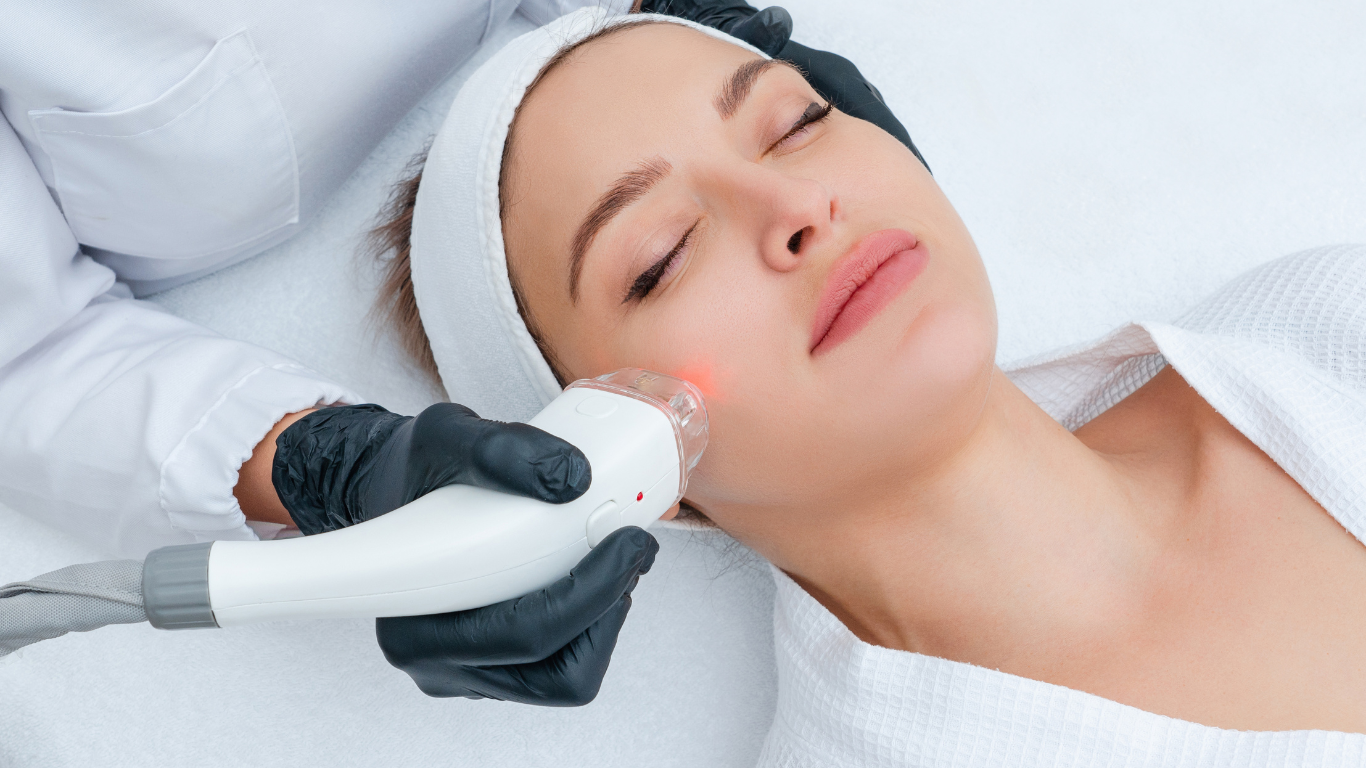
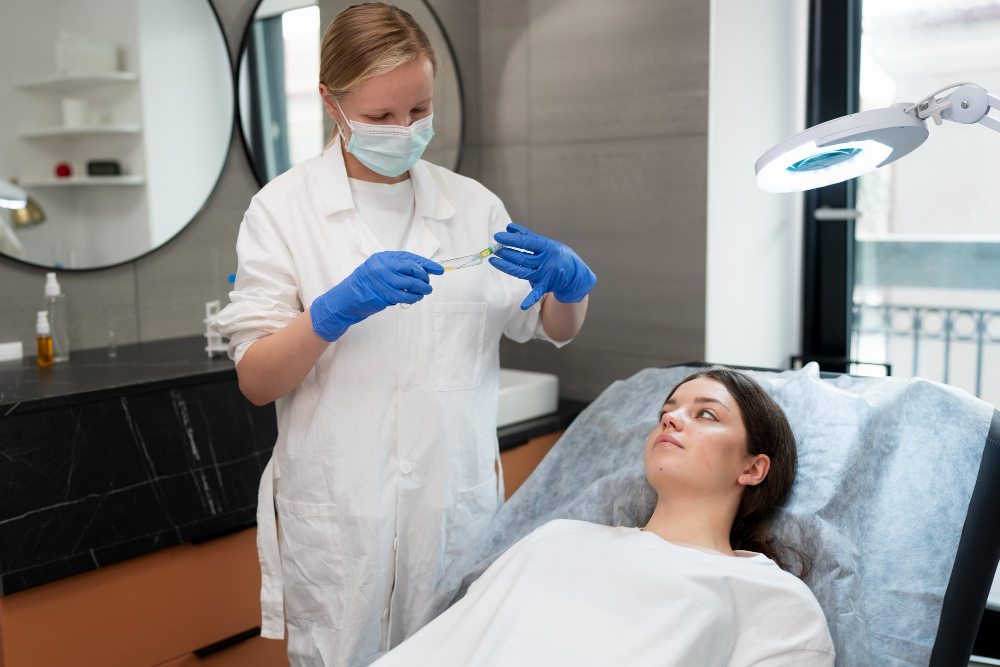
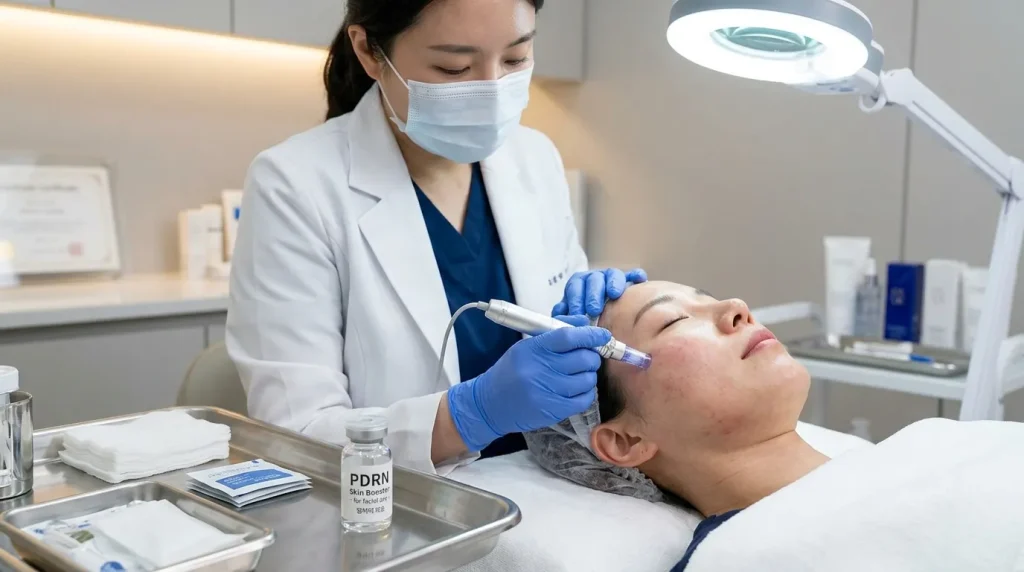
Patients undergoing a course of PDRN treatment typically notice gradual improvements in skin firmness and texture over the weeks following each session, with results continuing to build across a series of treatments.
This timeline reflects the underlying biology,collagen remodeling takes time, and the visible improvement in skin quality tracks the progressive increase in dermal collagen content rather than appearing immediately after a single session.
Most protocols involve a series of three to four sessions spaced one to two weeks apart, with maintenance sessions recommended at longer intervals to sustain results over time.
Comparing PDRN’s Collagen Effect to Other Stimulators
While biostimulators like calcium hydroxyapatite and poly-L-lactic acid also stimulate collagen production, they typically work through a foreign-body inflammatory response rather than direct receptor activation.
PDRN’s mechanism is comparatively gentler, with a milder inflammatory profile, which makes it a suitable option for patients seeking collagen stimulation with reduced downtime or for those with more sensitive skin who may not tolerate a stronger inflammatory stimulus as well.
Conclusion
PDRN supports collagen production through a well-documented combination of direct fibroblast activation, improved microcirculation, and reduced inflammation.
This multi-pathway approach explains why it has become a reliable tool for practitioners focused on genuine tissue quality improvement rather than temporary volumizing effects, and why its results, while gradual, tend to reflect real structural change in the treated skin.
Also Read: How PDRN Helps Repair Damaged Skin?