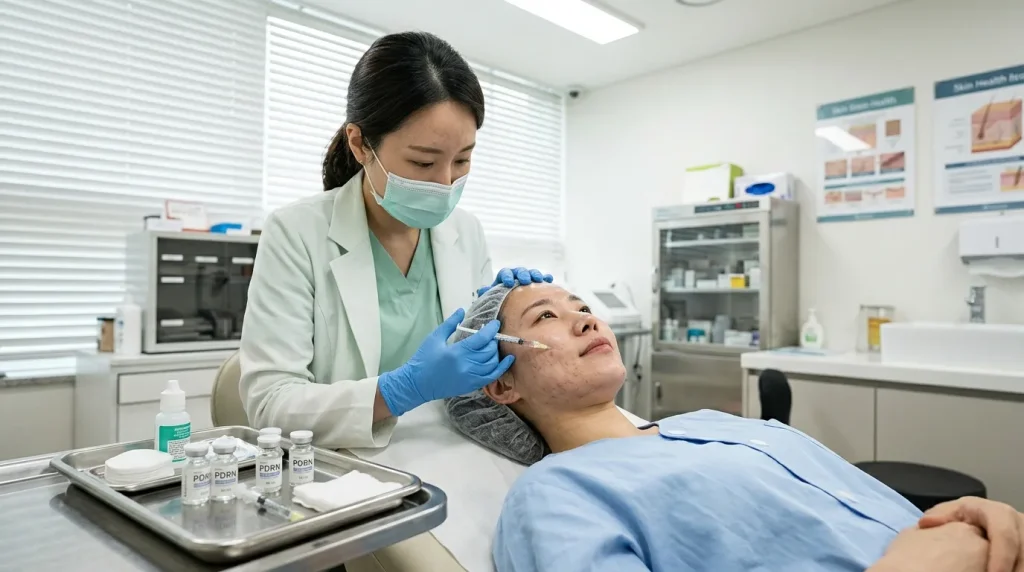
PDRN, short for polydeoxyribonucleotide, has become one of the most discussed ingredients in regenerative aesthetics over the past several years.
Originally used in wound healing and tissue repair in broader medical contexts, PDRN has found a clear place in aesthetic medicine for its ability to repair damaged and compromised skin. Understanding how it works clarifies why it has earned this reputation.
What PDRN Is?
PDRN is a biological compound derived from DNA fragments, most commonly sourced from salmon sperm cells due to their biological compatibility with human tissue.
Despite the unusual source, the resulting compound is highly purified and works through a well-documented mechanism that has nothing to do with its origin and everything to do with how it interacts with human cell receptors.
PDRN works primarily by binding to adenosine A2A receptors on cells. This receptor activation triggers a cascade of cellular responses associated with tissue repair, including increased blood flow to the treated area, reduced inflammation, and enhanced fibroblast activity.
How PDRN Repairs Damaged Skin?
Damaged skin,whether from sun exposure, acne scarring, post-procedure trauma, or general environmental stress,shows reduced cellular turnover, compromised microcirculation, and lingering low-grade inflammation. PDRN addresses each of these mechanisms directly.
By activating adenosine receptors, PDRN improves local blood flow, which means damaged tissue receives more oxygen and nutrients to support repair.
It reduces the inflammatory markers that keep damaged skin in a chronic, low-level irritated state, allowing the tissue to move into active repair mode rather than staying stuck in inflammation. It also stimulates fibroblast proliferation, which supports the rebuilding of the dermal structure that gets compromised in damaged or scarred skin.
Clinical Applications for Skin Repair
PDRN is commonly used in cases of post-acne scarring, where it helps remodel damaged dermal tissue over a series of treatments.
It is also frequently used following aggressive resurfacing procedures such as fractional laser or deep microneedling, where it accelerates the resolution of the post-procedure inflammatory phase and supports faster, more complete healing.
For patients with chronically sun-damaged or photoaged skin, PDRN’s combination of anti-inflammatory and tissue-repairing effects addresses both the visible texture changes and the underlying cellular dysfunction that sun damage causes.
PDRN and Wound Healing Background
PDRN’s aesthetic applications build directly on decades of use in wound care, where it has been used clinically to accelerate healing in diabetic ulcers and other slow-healing wounds.
This clinical history gives PDRN a strong evidence base that distinguishes it from many newer aesthetic ingredients that lack long-term data.
The mechanism that helps a diabetic ulcer heal faster is the same mechanism that helps damaged facial skin recover and rebuild.
What Treatment Typically Involves?
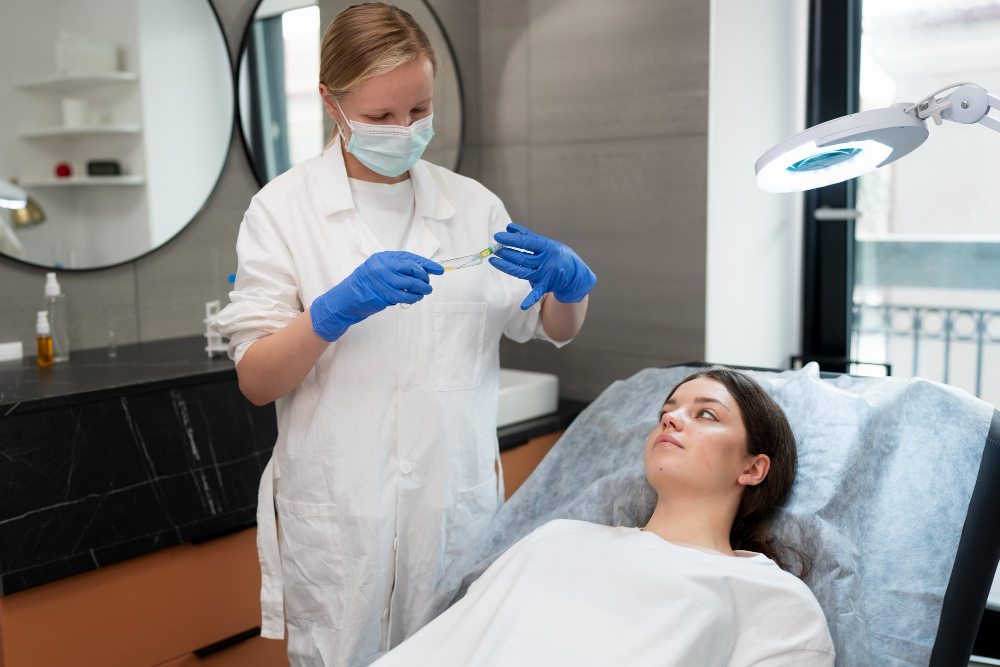
PDRN is most commonly delivered through injection, either as a series of fine, superficial injections across the treatment area or through mesotherapy-style application.
Treatment protocols generally involve a series of sessions spaced one to two weeks apart, with results building progressively as the tissue responds to repeated stimulation.
Patients typically tolerate PDRN treatment well, with mild, short-lived swelling or redness at injection sites that resolves within a day or two.
Conclusion
PDRN brings a well-established, evidence-backed repair mechanism into aesthetic medicine, working through improved circulation, reduced inflammation, and enhanced fibroblast activity to genuinely repair damaged skin rather than simply mask its appearance.
For practitioners treating patients with scarring, photodamage, or post-procedure recovery needs, PDRN offers a reliable, biologically grounded option with a strong track record behind it.
Also Read: How Exosomes Support Skin Repair and Rejuvenation?