Understanding that exosomes carry regenerative signals is one thing. Understanding exactly how that translates into visible skin improvement is what actually matters for treatment planning.
This blog looks specifically at the mechanisms through which exosomes repair and rejuvenate skin, and what that means for the results patients can expect.
The Cellular Communication Process
Skin repair, at its core, is a coordinated response between multiple cell types,fibroblasts, keratinocytes, immune cells, and endothelial cells all need to act in sequence for healing to happen properly. Exosomes function as the messengers that coordinate this sequence.
When exosomes derived from stem cells are introduced into the skin, they bind to target cells and release their cargo of proteins and genetic material.
This cargo essentially reprograms the target cell’s behavior, instructing fibroblasts to increase collagen and elastin synthesis, signaling keratinocytes to accelerate turnover and barrier repair, and modulating immune cell activity to reduce excessive inflammation while still allowing necessary repair signals through.
Accelerating the Healing Response
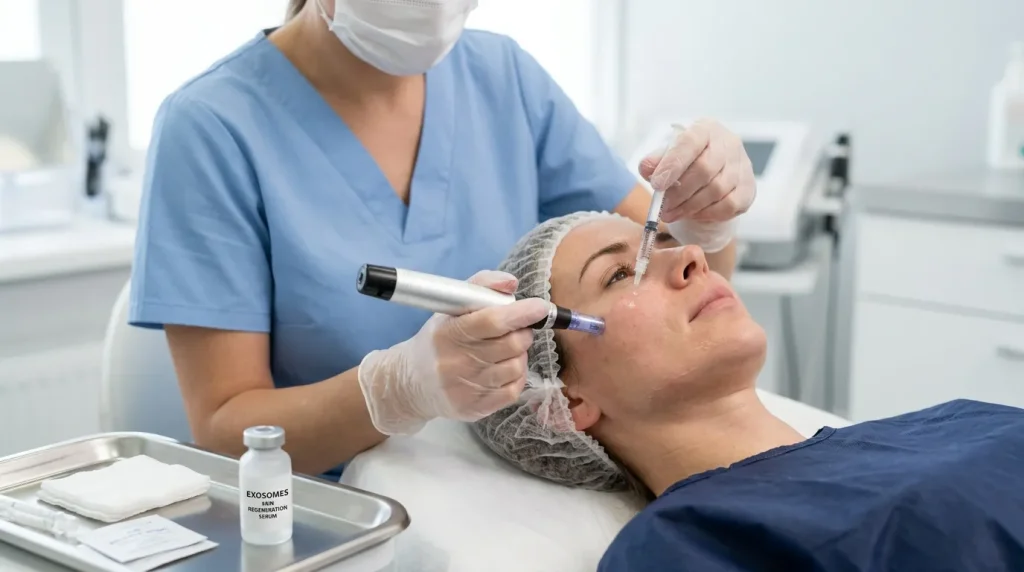
One of the most clinically valuable properties of exosomes is their ability to speed up recovery after a procedure. Following microneedling, laser treatment, or other skin-resurfacing procedures, the skin enters an inflammatory and repair phase that typically takes days to resolve. Applying exosomes during this window accelerates that timeline.
Patients undergoing exosome-supported recovery protocols often report reduced redness duration, faster resolution of micro-trauma from needling, and a quicker return to visible skin improvement compared to the same procedure performed without exosome support.
Improving Skin Texture and Tone
Beyond accelerated recovery, exosomes contribute directly to improved skin texture over a course of treatment. The increase in fibroblast activity leads to gradual collagen remodeling, which improves skin firmness and reduces the appearance of fine lines. The acceleration of keratinocyte turnover improves surface texture, helping address dullness and uneven tone.
These changes build progressively rather than appearing immediately, which is consistent with how most regenerative treatments work. Results typically become noticeable within a few weeks and continue to develop over the following months as the new collagen matures.
Addressing Inflammation and Sensitivity
Exosomes also carry anti-inflammatory signaling molecules that help calm the skin without suppressing the necessary phases of repair.
This is particularly relevant for patients with sensitive or reactive skin, or those recovering from aggressive resurfacing procedures.
By modulating the inflammatory response rather than blocking it entirely, exosomes support a healing process that resolves redness and irritation more quickly while still allowing the regenerative cascade to complete.
Supporting Barrier Function
A compromised skin barrier shows up as dryness, sensitivity, and increased susceptibility to environmental damage.
Exosomes support keratinocyte function in a way that strengthens the skin’s barrier, improving hydration retention and resilience over time.
For patients who have experienced barrier damage from over-exfoliation, sun exposure, or aggressive previous treatments, this barrier-supporting effect is often one of the most appreciated outcomes.
What This Means for Treatment Planning?
Because exosomes work by amplifying the skin’s own repair mechanisms rather than adding external volume or structure, they integrate well into almost any treatment plan.
Practitioners commonly use them as a recovery accelerant after resurfacing procedures, a standalone treatment for general skin quality improvement, or a complementary addition to biostimulator or filler protocols where overall skin health supports the primary treatment’s results.
Conclusion
The repair and rejuvenation effects of exosomes come down to coordinated cellular signaling,faster healing, better collagen remodeling, improved texture, and a calmer inflammatory response.
For practitioners building comprehensive treatment plans, understanding these mechanisms makes it easier to position exosomes correctly within a broader regenerative strategy, and to explain to patients exactly why the results develop the way they do.
Also Read: What Are Exosomes? A Beginner’s Guide to Regenerative Aesthetics