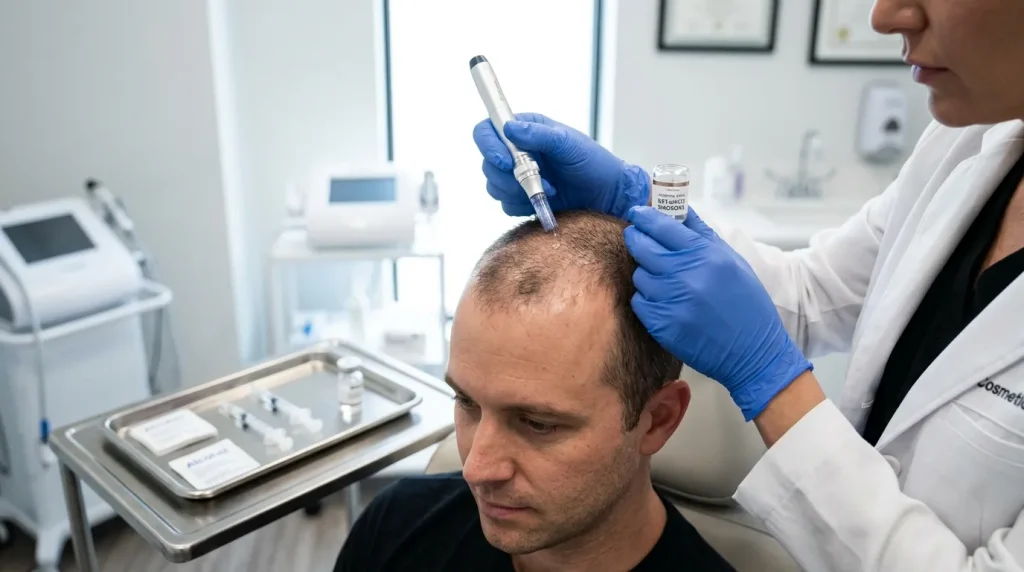
Hair fall and thinning have become one of the biggest worries of both men and women. Genetic makeup, age, hormonal imbalances, stress, malnutrition, and various diseases can negatively impact the well-being of hair follicles. As people become more interested in regenerative medicine, scientists are studying new methods which could be helpful for better hair growth.
Exosomes have started receiving more attention from scientists in relation to hair restoration. Exosomes are microscopic extracellular vesicles which are secreted by cells and contain different types of proteins, growth factors, lipids, and signaling molecules. They can transport biological information from cell to cell and can affect certain processes related to tissue regeneration and restoration.
In the case of hair restoration procedures, exosomes can contribute to a better surrounding of hair follicles. Although research is still underway, let’s see some of the possible ways how exosomes can be applied for healthy follicle functioning.
Delivering Growth Factors to Hair Follicles
Hair follicles need a healthy supply of growth signals to remain active and produce strong hair.
Exosomes can carry various bioactive molecules, including growth factors and proteins, that may influence the behavior of cells around the hair follicle.
These signals may help support:
- Hair follicle activity
- Cellular repair
- Tissue regeneration
- Healthy hair growth
- Follicle maintenance
The goal is to provide biological signals that may help support the natural functions of the hair follicle.
Supporting Hair Follicle Cell Communication
Healthy hair growth depends on communication between different cells in and around the follicle.
Exosomes act as biological messengers, carrying information from one cell to another. This communication may influence how cells respond to changes in their environment.
Improved cellular communication may support:
- Follicle activity
- Cell coordination
- Tissue repair
- Hair growth signaling
- Scalp health
This signaling function is one of the key reasons exosomes are being studied in regenerative hair treatments.
Reducing Scalp Inflammation
Inflammation can affect the scalp environment and may contribute to certain types of hair loss. When inflammation becomes prolonged or excessive, it can interfere with normal cellular activity around the hair follicle.
Exosomes are being researched for their potential ability to help regulate inflammatory responses.
This may support:
- A healthier scalp environment
- Balanced inflammatory responses
- Improved follicle function
- Reduced cellular stress
- Better conditions for hair growth
However, the cause of hair loss should always be properly diagnosed before choosing a treatment.
Stimulating Hair Follicle Stem Cells
Hair follicles contain specialized stem cells that play an important role in the natural hair growth cycle.
Researchers are investigating whether exosomes may influence these cells and support their activity. The biological signals carried by exosomes may help encourage communication between stem cells and surrounding follicular cells.
This area of research may have potential for:
- Supporting follicle regeneration
- Encouraging cellular activity
- Maintaining follicle function
- Supporting the hair growth cycle
More research is needed to understand exactly how exosomes influence follicular stem cells in humans.
Promoting the Hair Growth Cycle
Hair naturally moves through different phases, including growth, transition, and resting periods. Problems with this cycle can contribute to excessive shedding or thinning.
Exosome therapy is being studied for its potential to influence signaling pathways involved in the hair growth cycle.
Potential effects may include:
- Supporting the active growth phase
- Encouraging healthy follicle activity
- Reducing excessive shedding
- Supporting the transition between growth phases
- Maintaining healthier follicles
Because hair grows slowly, any visible changes generally take time to develop.
Improving Blood Supply to Hair Follicles
Hair follicles require oxygen and nutrients to function properly. A healthy blood supply helps deliver these essential resources to the scalp.
Some research suggests that exosome-derived signals may influence angiogenesis, the process involved in forming new blood vessels.
Improved circulation may help support:
- Oxygen delivery
- Nutrient supply
- Cellular activity
- Tissue repair
- Follicle health
However, the relationship between exosome therapy and improved blood supply to human hair follicles is still being investigated.
Strengthening Weak Hair Follicles
When follicles become weaker, the hair they produce may become thinner and more fragile. This process is often seen in certain types of progressive hair loss.
Exosomes may help support the cells surrounding the follicle by delivering biological signals that encourage repair and regeneration.
Potential benefits may include:
- Supporting follicle structure
- Improving the scalp environment
- Encouraging healthier cellular activity
- Supporting stronger hair production
The outcome depends heavily on the underlying cause and stage of hair loss.
Supporting Healthier Hair Growth
The overall goal of exosome-based hair treatments is to create conditions that support healthier hair growth.
By influencing cellular communication, inflammation, tissue repair, and follicle activity, exosomes may help support the biological processes involved in hair production.
This may contribute to:
- Improved hair density
- Thicker-looking hair
- Reduced shedding
- Healthier scalp conditions
- Improved overall hair quality
Results are not guaranteed and can vary significantly between individuals.
Protecting Follicles from Cellular Stress
Hair follicles can be affected by oxidative stress and other forms of cellular damage. Factors such as aging, inflammation, and environmental exposure may contribute to stress within the scalp and surrounding tissues.
Exosomes contain various molecules that may influence cellular responses to stress and support tissue health.
Potential benefits may include:
- Supporting cellular resilience
- Regulating inflammatory responses
- Encouraging tissue repair
- Maintaining a healthier follicle environment
This is an active area of research, and scientists are continuing to investigate how exosomes affect follicular cells.
Enhancing Long-Term Follicle Function
Supporting hair growth is not only about encouraging new hair. Maintaining the long-term health of existing follicles is also important.
Exosomes may have potential to support ongoing follicle function by influencing cellular communication and regenerative processes.
Long-term follicle support may involve:
- Maintaining healthy cellular activity
- Supporting the hair growth cycle
- Improving the scalp environment
- Encouraging tissue regeneration
- Supporting overall follicle health
However, long-term results depend on the cause of hair loss, individual biology, lifestyle, and other treatments being used.
Conclusion
The exosomes field is an emerging topic of investigation for hair loss treatment and regenerative medicine. Being able to transfer growth factors, proteins, and other signaling molecules, exosomes might assist in improving cell-to-cell communication and biological processes associated with hair follicles.
Scientists explore their ability to promote follicular stem cells, control inflammation, create a suitable scalp microenvironment, enhance the hair growth process, and protect hair follicles from cellular stress. Therefore, there is a possibility that the development of exosomes hair treatment can become an option for individuals experiencing hair thinning and some kinds of hair loss problems.
Though exosome hair treatment therapies are in their development phase and require additional high-level research, hair loss may be caused by various reasons. In order to apply an adequate treatment, it is necessary to make a diagnosis first. If you consider exosome hair treatment, you need to contact a specialized healthcare professional or a hair loss expert.
Also Read: How Exosomes Are Used After Microneedling?