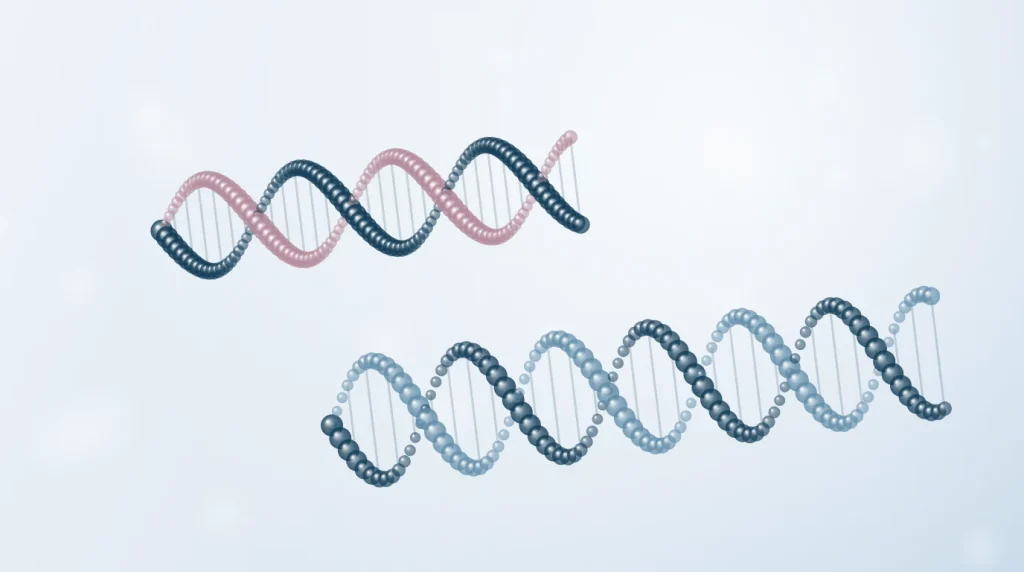
PDRN and PN are both DNA-derived ingredients, usually purified from salmon or trout, but they are not the same thing. PDRN (polydeoxyribonucleotide) is made of shorter DNA fragments that mainly act as a repair signal in the skin. PN (polynucleotides) uses longer DNA chains that also form a hydrating, supportive gel. In practice, clinicians tend to choose PDRN for repair and recovery, and PN for overall skin quality and delicate areas.
Key takeaways
- PDRN and PN come from the same source material but differ in fragment length and physical behaviour.
- PDRN works mainly through the adenosine A2A receptor and the “salvage pathway” that recycles nucleotides for cell repair.
- PN keeps a longer chain structure, which gives it a viscous, hydrating texture in the skin in addition to its repair effects.
- Evidence for both is promising but still based on small studies and products that are not standardised.
- Both are professional treatments. People with a fish allergy should discuss it with their clinician first.
What Are PDRN and PN?
Both ingredients are made by extracting and purifying DNA, most often from the reproductive cells of salmon or trout. The purification removes proteins and other impurities, leaving nucleotide chains that the body can use as building blocks and signals for tissue repair. For a full introduction, see our guide What Is PDRN? Benefits, Uses, Safety & How It Works.
The terms are often used interchangeably in marketing, which causes confusion. A 2026 narrative review in the Journal of Cutaneous and Aesthetic Surgery describes PDRN as a subset of polynucleotides and notes that one proposed cut-off places PN at 1,500 kDa and above, with PDRN below that size. Not every manufacturer uses the same definition, so the product’s technical data sheet matters more than the label.
PDRN vs PN: Key Differences at a Glance
| Feature | PDRN | PN (polynucleotides) |
|---|---|---|
| Source | Purified fish DNA (salmon or trout); plant and algae sources also exist | Purified fish DNA (salmon or trout) |
| Chain length | Shorter fragments | Longer, high-molecular-weight chains |
| Main action | Repair signal through the adenosine A2A receptor and nucleotide recycling | Nucleotide supply plus a hydrating, viscoelastic gel structure |
| Texture in the skin | Fluid | More viscous, gel-like |
| Typical clinical focus | Skin repair, recovery after procedures, redness, scalp care | Overall skin quality, fine lines, thin or delicate skin, scars |
| Evidence base | Longer history in wound-healing research; small aesthetic studies | Growing number of small aesthetic studies |
| Who applies it | Licensed healthcare professional | Licensed healthcare professional |
How PDRN Works
PDRN fragments break down into smaller nucleotides and nucleosides in the tissue. These bind to adenosine A2A receptors on cells, which is linked to reduced inflammation, better blood vessel formation and faster tissue repair. The same breakdown products feed the “salvage pathway”, which lets cells reuse existing nucleotides to make new DNA instead of building them from scratch. This saves energy for cells that are trying to repair themselves.
That is why PDRN is often discussed for skin that is stressed, damaged or recovering. Read more in How PDRN Helps Repair Damaged Skin and How PDRN Supports Collagen Production.
How PN Works
PN shares the same building-block effect, but its longer chains hold water and form a soft, elastic gel. This gives an immediate hydrating and cushioning effect while the repair signals work more slowly in the background. Clinicians often value this texture in areas where the skin is thin, such as under the eyes or on the neck, where they want to improve quality without adding visible volume.
When Clinicians Choose PDRN, PN or Both
- PDRN first when the main goal is repair: sensitised or redness-prone skin, recovery after laser, peels or microneedling, and some scalp protocols.
- PN first when the goal is skin quality: dull, dehydrated or crepey skin, fine lines and delicate areas.
- Combined or staged plans, where PDRN calms and prepares the skin and PN follows to build quality over a course of sessions.
- With exosomes, which work as cell-to-cell messengers rather than building blocks. See When To Use Exosomes, PDRN, or Both?
The right choice always depends on the patient’s skin, history and goals, and on the specific product’s data. A typical course involves several sessions a few weeks apart, but protocols vary between manufacturers.
What Does the Evidence Say?
Laboratory and animal studies on PDRN’s repair mechanism are well established, and wound-healing research goes back many years. In aesthetic medicine, the clinical studies for both PDRN and PN are encouraging but mostly small, with different products, doses and techniques. The 2026 review cited above notes that a 2024 systematic review found inconsistencies in the PN evidence and several gaps for PDRN. In short, results look promising, but larger, standardised trials are still needed.
Safety and Who Should Be Careful
- Temporary redness, swelling, tenderness or small bumps for one to three days are the most commonly reported effects.
- Because most products are fish-derived, people with a fish allergy should tell their clinician; a patch test may be advised.
- There is little data in pregnancy and breastfeeding, so treatment is usually postponed.
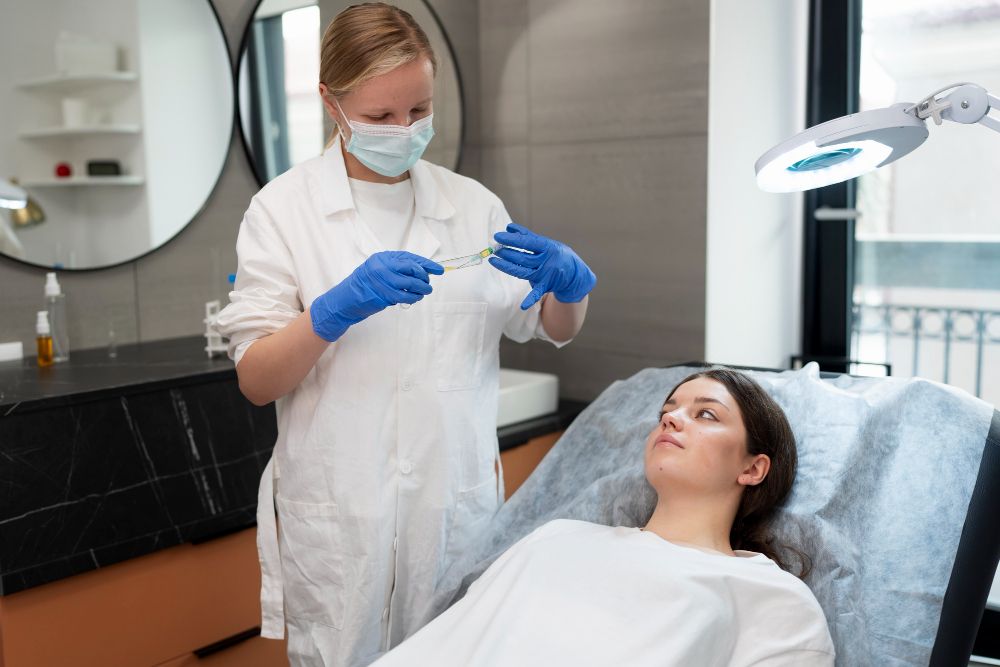
- Treatments should be carried out by a licensed professional using registered products with clear traceability.
Where Topical PDRN Fits In
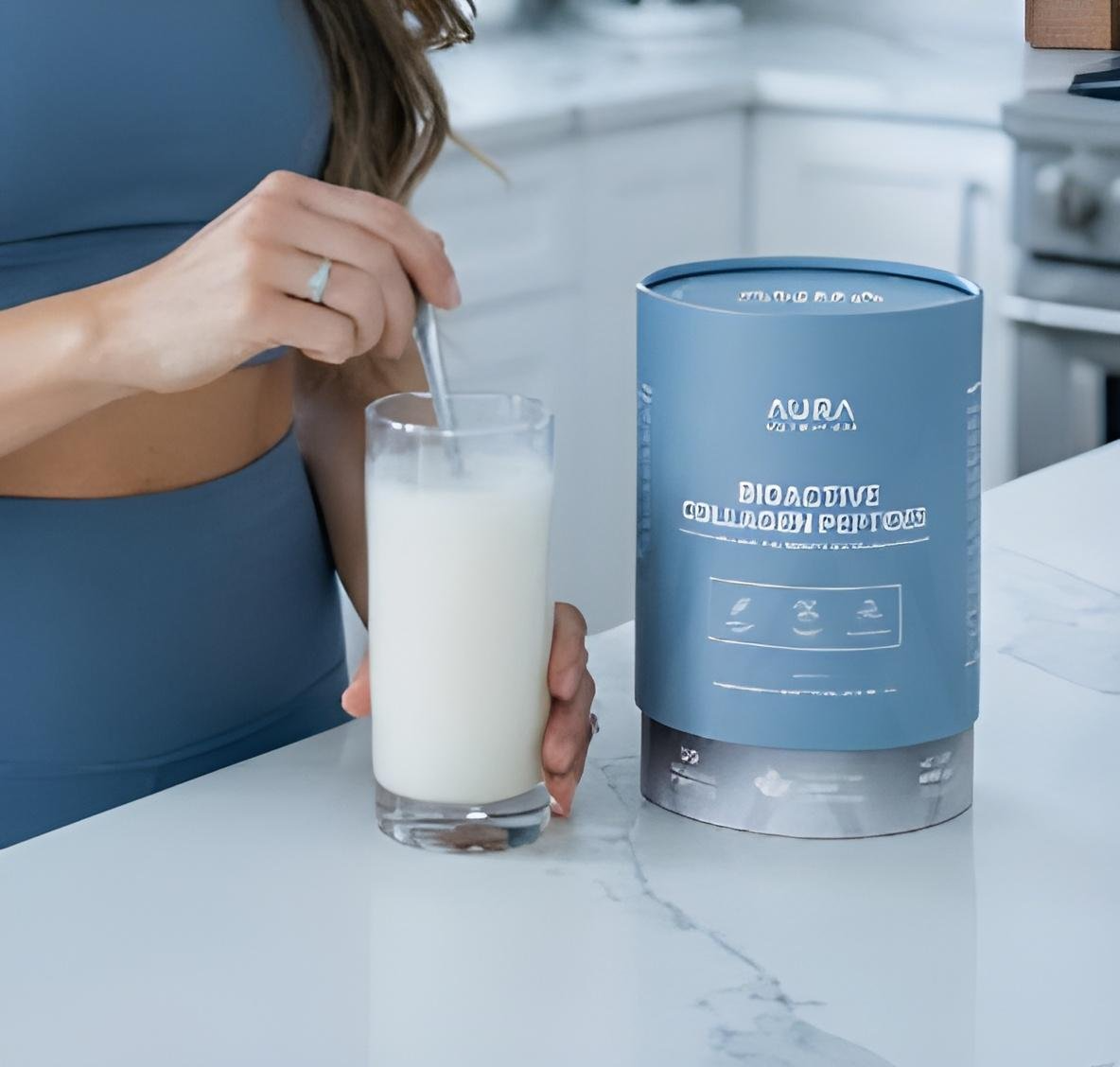
PDRN also appears in creams, serums and sprays. These are a different category from in-clinic treatments: they support the skin surface, hydration and comfort rather than reaching deep layers. We explain the evidence in Do PDRN Serums Work?. In the AURA Ritual range, EXOHEAL Topical Cream with PDRN and EXOHEAL Spray are designed to soothe and protect sensitive skin between treatments.
Frequently Asked Questions
Is PN the same as PDRN?
No. Both are DNA-derived, but PDRN uses shorter fragments that act mainly as a repair signal, while PN uses longer chains that also hydrate and support the skin as a gel.
Which lasts longer, PDRN or PN?
PN is generally described as having a longer-lasting effect because of its gel structure, while PDRN acts more quickly on repair. Results depend on the product, the number of sessions and the patient.
Can PDRN or PN be combined with exosomes?
Yes, clinicians sometimes combine them, because exosomes work as signalling messengers while PDRN and PN supply building blocks and support. Any combination should follow the manufacturers’ guidance.
Are PDRN and PN vegan?
Most are not, because they are made from fish DNA. Some PDRN ingredients are extracted from plants such as ginseng or from algae, mainly in skincare products.
Who should avoid PDRN and PN treatments?
People with a fish allergy, active skin infection, or who are pregnant or breastfeeding should discuss alternatives with their clinician first.
References
- Polynucleotides and Polydeoxyribonucleotides in Dermatology: A Narrative Review. Journal of Cutaneous and Aesthetic Surgery, 2026.
- Social Media Mythbusters: PDRN Serums. Dermatology Times, 2026.
This article is for general education and does not replace advice from a qualified healthcare professional. Clinics interested in AURA professional products can contact our team.